HVAC Marketing: How to Get More Leads and Fill Your Schedule in 2026
The Timing Problem That Costs HVAC Companies the Most Money
An HVAC company that waits until July to start marketing for summer is already losing to the competitors who started in May.
This is the core problem with most HVAC marketing. When the phone rings in peak season from existing customers, referrals, and homeowners with broken units, there is no urgency to do anything different. When the phone goes quiet in October or April, there is urgency, but the channels that produce results (organic search rankings, Map Pack visibility, review volume) cannot be switched on overnight.
The gap between when an HVAC company wants leads and when marketing can produce them is typically four to six months. Companies that only market reactively are always behind the competition that invested during the quieter months.
This timing problem also explains why so many HVAC companies end up competing on price. If you are not getting found first on Google and in the Map Pack, you are competing for whoever is left after the companies with better online visibility have filled their schedules. Price becomes the only differentiator when you are not in position one.
This guide covers every HVAC marketing channel that produces results in 2026, what each one costs and delivers, how to structure your marketing through both peak and slow months, and what a realistic budget allocation looks like depending on your business size.
Why HVAC Marketing Behaves Differently Than Most Service Industries
HVAC businesses serve two fundamentally different customer types that require different marketing approaches.
The first is the emergency customer. Their air conditioning stopped working at 3 PM on a 97-degree day. They are searching on their phone right now. They will call the first HVAC company that picks up. Availability matters more than price, brand, or reviews. They are not comparing options.
The second is the planned customer. They want a new furnace installed before winter. They are replacing a system that is 14 years old. They want an annual maintenance contract. These customers take days or weeks to decide, read reviews, request multiple quotes, and often do research online before calling anyone.
Marketing to these two groups requires different channels, different messaging, and different timing. Emergency demand is captured through Google Ads and Local Services Ads that appear the moment someone searches, and through Map Pack rankings that show up for location-based queries. Planned demand is built through organic content, review reputation, and content that reaches homeowners before they reach emergency mode.
Most HVAC marketing strategies that fail do so because they treat every potential customer as the same type. They run one set of ads with one message and wonder why the cost per lead is high during slow season when emergency volume is low.
Which HVAC Marketing Channels Actually Produce Leads?
Not every channel performs equally for HVAC companies. Here is what each one delivers, what it costs to run well, and which customer type it reaches.
| Channel | Best Customer Type | Time to Results | Cost per Lead Range |
|---|---|---|---|
| Google Ads | Emergency and replacement | Same day | $30 to $65 per call |
| Local Services Ads | Emergency, verified jobs | Same week | $20 to $45 per contact |
| Local SEO / Map Pack | Both types | 3 to 6 months | Decreases over time |
| Organic SEO Content | Planned and replacement | 6 to 12 months | Lowest at scale |
| Email to Existing Customers | Seasonal tune-up, renewal | Same day | Near-zero cost |
| Social Media | Brand awareness | Ongoing | Not a primary lead channel |
| Review Management | Supports all channels | Ongoing | Indirect conversion lift |
The important takeaway from this table is that HVAC companies typically need two layers of marketing running simultaneously: paid channels for immediate lead volume, and organic channels being built in parallel for lower-cost leads over time.
A company running only Google Ads is renting visibility that stops the moment the budget pauses. A company investing in HVAC SEO and GBP authority is building an asset that keeps generating leads without continuous spend. The most cost-efficient HVAC marketing strategies use paid to fill the schedule while organic builds, then gradually shift budget mix as organic starts producing.
How Local SEO Actually Works for HVAC Companies
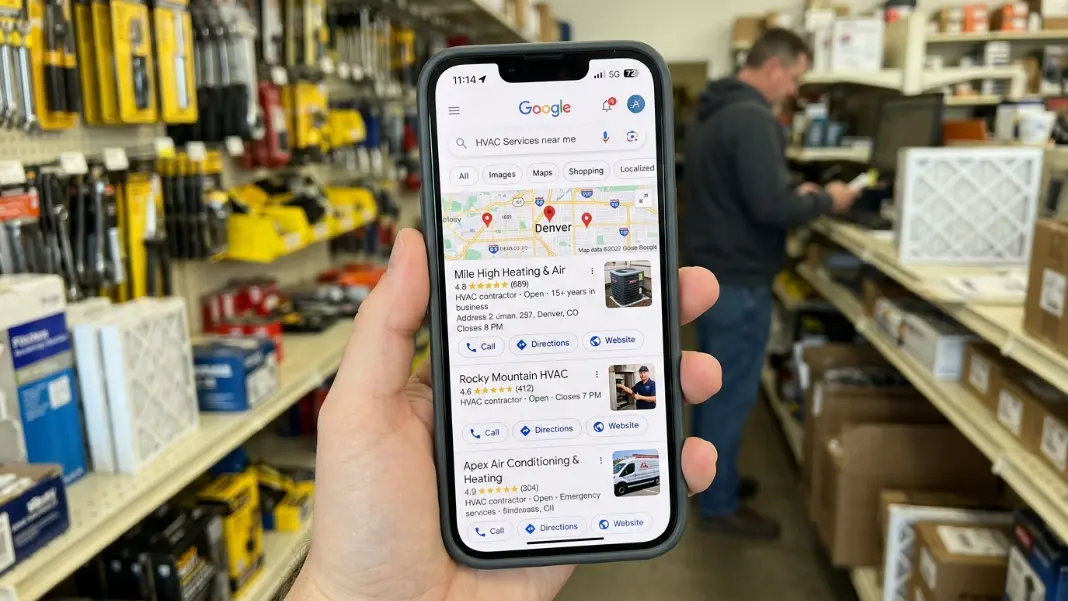
For most HVAC companies, local SEO is not primarily about ranking on page one of Google for generic terms. It is about ranking in the Map Pack, the three local business results that appear above the organic listings for searches like "AC repair near me" or "furnace installation [city]."
Map Pack results generate significantly more calls than organic website rankings for local HVAC searches. Most people searching for emergency HVAC service click the first available Map Pack result with enough reviews and a callable phone number. They do not scroll down to read organic blog articles.
Your Map Pack position is determined by three factors: relevance (do your Google Business Profile categories and services match what the searcher is looking for), distance (how close is your business or service area to the searcher), and prominence (how trusted and well-known is your business based on reviews, citations, and online presence).
Relevance is fixed by your category and service selections in GBP. Distance is geographic. Prominence is the factor most within your control, and it is the differentiator between HVAC companies in the same service area.
An HVAC company with 280 reviews averaging 4.8 stars, complete and consistent information across 40 or more citation sources, regular GBP posts, and a well-structured website will outrank a competitor with fewer reviews, inconsistent listings, and an incomplete profile, regardless of how long that competitor has been in business.
The practical work of local SEO for HVAC companies involves: fully completing your Google Business Profile across every field, selecting accurate HVAC service categories, posting content updates at least twice per month, building citations on HVAC-specific directories, and running a systematic review generation process after every completed job.
Google Ads for HVAC: When It Makes Sense
Google Ads produces the fastest HVAC leads of any channel. The trade-off is cost and what happens when you stop paying.
A well-managed HVAC Google Ads campaign in most US markets produces calls at $30 to $65 per call. At an average service call revenue of $200 to $350, the math works. For a furnace replacement at $6,000 to $12,000, even $80 per call is economical if your conversion rate from call to booked job is solid.
What separates profitable HVAC Google Ads from campaigns that waste budget is negative keyword management. Without a proper negative keyword list, you pay for clicks from people searching "how to clean AC coils," "HVAC repair DIY," "HVAC filter size chart," "HVAC technician salary," and dozens of other terms that use HVAC keywords but represent non-buyers. A well-built HVAC campaign maintains 200 to 300 negative keywords to filter out this non-purchase traffic before it eats the budget.
Google Local Services Ads are a separate product from standard Google Ads and worth pursuing for any verified HVAC contractor. LSA charges per contact (a call or message through the ad) rather than per click. Google verifies your contractor license, insurance, and background check before showing your profile, which means LSA contacts tend to convert at a higher rate than standard PPC clicks because the customer knows they are reaching a verified business.
Running both LSA and Google Ads together is the standard approach for established HVAC companies. New or less-reviewed contractors should prioritize getting LSA-verified and building review volume before allocating heavy budget to standard Google Ads. The Google Ads for HVAC page covers campaign structures for both cooling season and heating season in detail.
Seasonal HVAC Marketing: The Year-Round Calendar
The HVAC companies with the most consistent lead flow are not the ones who spend the most during peak season. They are the ones who do marketing work in the off-season that positions them well when peak arrives.
Here is how to structure HVAC marketing across the full year.
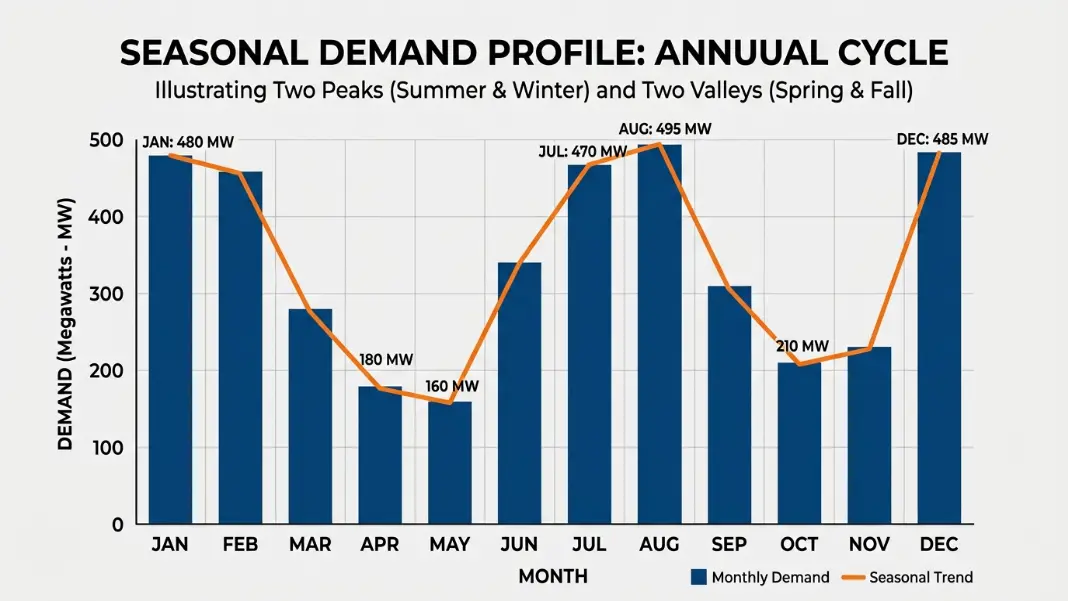
January through March is the time to build organic content for cooling season keywords, generate reviews from the previous heating season, complete any website technical work, and update GBP for the coming season. Content published in February has several months to index and gain traction before June demand peaks.
April and May are pre-peak and the best months to ramp Google Ads cooling season campaigns before competition drives bid prices up. April is also when tune-up offers produce strong immediate revenue and surface systems that will need replacement in the summer, creating the highest-value replacement jobs before any competitor has found those customers.
June through August is peak cooling season. Maximum paid budget allocation. Emergency AC repair and same-day service messaging. This is when Map Pack ranking built in the previous months does the most revenue work, producing calls at a fraction of the paid cost.
September and October are the transition. Begin heating season SEO content, furnace replacement landing pages, and fall tune-up campaigns. This is also the best window for review generation outreach because summer produced a large batch of satisfied customers.
November through January mirrors summer for heating: emergency furnace calls, same-day service, no-heat messaging. Paid budgets should be fully active. GBP post frequency should increase to maintain visibility as competition intensifies.
Most HVAC companies do the opposite of this: they market hard during peak and go quiet when it slows. The result is predictable boom-bust lead flow and constant scrambling to fill the schedule in shoulder months.
What a Realistic HVAC Marketing Budget Looks Like
Budget allocation for HVAC marketing depends on business size, market competition, and growth goals. These are the ranges established HVAC companies typically use.
| Business Stage | Monthly Spend | Recommended Allocation | Expected Outcome |
|---|---|---|---|
| Starting Out | $1,500 to $2,500 | 70% Google Ads, 30% local SEO | 15 to 30 leads/month, early Map Pack visibility |
| Growing | $2,500 to $5,000 | 50% Google Ads, 30% SEO, 20% content | 30 to 60 leads/month, Map Pack position 1 to 3 |
| Scaling | $5,000 to $10,000 | 40% paid, 30% SEO, 20% content, 10% reputation | 60 to 120+ leads/month, multiple area rankings |
These numbers assume the spend is managed by someone who understands HVAC specifically. A general agency burning $3,000 per month on broad HVAC terms without proper negative keyword management, split campaigns by service type, and seasonal budget adjustments will produce significantly higher cost per lead than an HVAC marketing agency that has built these campaigns before.
The most common budget mistake is over-allocating to paid and under-investing in organic, then being surprised when paid campaigns compress margins and there is no organic foundation to fall back on. Paid advertising is rented visibility. SEO and GBP authority are owned assets that retain value over time.
A second common mistake is cutting marketing budget during slow season to control costs. Slow season is exactly when organic work should be running because those investments take months to produce results. Cutting in slow season means the next peak season starts from scratch.
Common HVAC Marketing Mistakes That Kill Lead Flow
An incomplete Google Business Profile. Missing hours, wrong service categories, no photos, or an outdated address removes you from Map Pack contention before the competition even starts. GBP is not a one-time setup task. It requires regular updates, photos from actual jobs, and consistent post activity to maintain its ranking signals.
No review generation system. HVAC companies with 300 reviews did not accumulate them by accident. They have a repeatable process: an automated SMS sent after every completed job with a direct link to the Google review page. Most satisfied customers will leave a review when the process is easy and immediate. Almost none will do it unprompted six weeks after the job.
Marketing only during peak season. The channels that drive peak season results need to be built four to six months before that season. Companies that start SEO content in June for June demand will not see results from that content until the following year.
No call tracking by source. Without call tracking numbers assigned to each marketing channel, you cannot tell whether your leads come from Google Ads, organic search, LSA, or your GBP listing. This makes budget decisions arbitrary. Eliminating a channel that appears expensive may mean cutting off your best lead source because the attribution was wrong.
A website built for design, not conversion. A visually impressive HVAC website that loads slowly on mobile, buries the phone number, uses a generic contact form as the primary CTA, and lacks distinct messaging for emergency versus planned customers will produce fewer leads per visitor than a simpler site built with HVAC conversion behavior in mind. HVAC web design has conversion requirements that a general designer typically does not account for.
Ignoring reputation until there is a problem. Review rating and volume affect both your Map Pack ranking and the percentage of searchers who call you versus a competitor. An HVAC company with 40 reviews at 4.3 stars loses to a competitor with 140 reviews at 4.8 stars in almost every market, regardless of which company does better work. Reputation management for HVAC addresses this systematically before it becomes a competitive liability.
Building HVAC Marketing That Works Year-Round
HVAC marketing that only produces leads in summer is not a competitive strategy. The companies consistently filling their schedules across all 12 months are investing in local SEO and GBP authority in the off-season, running paid advertising efficiently during peak periods, and running a review generation system that operates automatically after every completed job.
They are not competing on price because they are being found first. They are not scrambling for leads in April because they invested in organic channels in January.
If you want to see what the HVAC marketing opportunity looks like in your specific service area (which channels are underperforming, where competitors are ranking that you are not, and what a 90-day action plan would look like), the Nextvure HVAC marketing team offers a free audit with no commitment. Request yours here.