Why Your Content Marketing Isn't Driving Leads: 6 Gaps Most Service Businesses Have

The 100-Article Problem
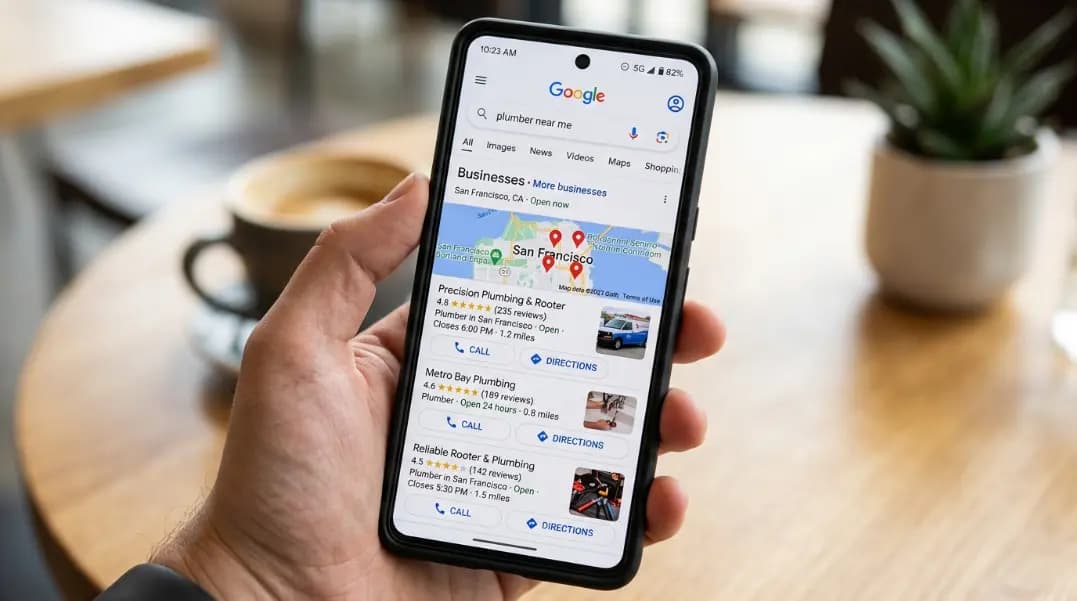
A plumbing company publishes 60 blog posts over two years. Traffic is minimal. Calls from organic search are almost zero. The owner concludes that content marketing does not work for plumbers.
The content marketing did not fail. The process behind it failed.
This pattern shows up across home services, legal, dental, HVAC, and pest control. Service businesses invest real time and budget into blog content, see nothing come back in lead volume, and walk away from a channel that should be one of their strongest long-term sources of inbound calls.
The cause is almost never the writing itself. It is the six structural problems that happen before, during, and after the writing. Fix those, and content marketing produces compounding organic traffic that generates leads without additional spend per article. Leave them in place, and every new article is dead on arrival.
Gap 1: Topics Are Picked by Opinion, Not Search Demand
Most service businesses choose content topics by asking "what would be useful for customers to know?" That sounds reasonable. The problem is that useful and searchable are two completely different things.
An HVAC company might publish "5 Ways to Make Your Home More Energy Efficient" because it is genuinely useful. But if 40 people per month search that term in their market, the article can rank in position one and still drive almost no traffic. Meanwhile, "AC not cooling house" gets searched 3,200 times per month in the same market, and the company has no content for it at all.
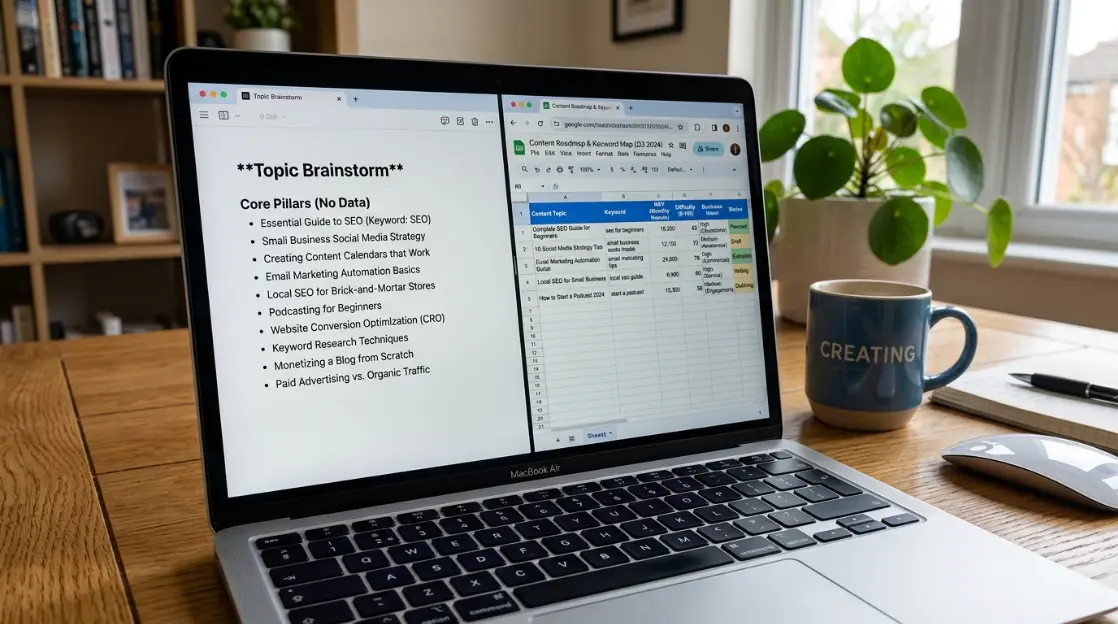
Content marketing services for service businesses start with keyword validation, not with topic brainstorming. Every article maps to a search term with confirmed volume before a word is written. Without that step, content investment is essentially a lottery.
The fix requires a keyword research phase before any content is produced. The output is a prioritized list of terms sorted by search volume, competition level, and commercial intent, so the first articles published are the ones most likely to generate traffic that converts.
Gap 2: Seasonal Content Goes Live Too Late
Pest control, landscaping, HVAC, and roofing are highly seasonal businesses. Their customers search for specific services in predictable patterns tied to weather and time of year. This predictability is a major content marketing advantage, but only if you use it correctly.
Google needs four to eight weeks to index and rank new content after publication. An article published in late March about termite swarm identification is competing against pages that have been indexed since January or February, when the seasonal content window actually opened. By the time a reactive article reaches the top of search results, the peak search period has passed.
The same pattern applies to mosquito season content, fall rodent-proofing guides, spring landscaping articles, and summer AC maintenance posts. Publishing during the season produces results for the following year. Publishing before the season produces results immediately.
A service business with a 12-month content calendar that publishes six to eight weeks before each seasonal peak will consistently outrank competitors who publish reactively. According to BrightLocal's Local Business Content Report, businesses that planned seasonal content in advance generated 42 percent more organic traffic during peak periods than those who published during the season itself.
Gap 3: All Content Targets the Same Buyer at the Same Stage
Most service business content falls into one of two categories: general educational content at the top of the funnel, or service description pages at the bottom. Both have a role. What is usually missing is the middle.
A homeowner who searches "how to tell if you have bed bugs" is not ready to book. They are trying to confirm whether they have a problem. Content that answers their question accurately and ends with a clear path to a professional assessment converts that research visit into a call. Content that is purely informational with no bridge to a service page loses the lead.
At the same time, a homeowner who searches "bed bug exterminator near me" has already decided they need professional help. Landing them on a long educational guide instead of a page built for conversion is an equally common miss.
Effective content marketing maps content to each stage of the buyer journey. Research-stage content answers identification and educational questions. Comparison-stage content covers cost, process, and what to expect. Decision-stage content is a landing page built for a specific service or pest type, with a phone number in the first viewport.
Without that mapping, you can have 60 articles generating traffic from the wrong stages for the wrong intent, and a near-zero call rate across all of them. Pair your content program with conversion rate optimization to make sure the traffic your content generates actually turns into calls.
Gap 4: Content Sits in Isolation With No Internal Link Structure
An article that ranks on page one for a research-stage keyword has done its job. But if that article has no internal links to service pages, the visitor who finishes reading it has nowhere to go except back to Google.
Most service business blog posts have no links to the company's own service pages. The content earns the traffic, but the traffic escapes without taking any action because there is no path from the article to the phone number or booking form.
Every article needs at least one internal link to the most relevant service page. A termite identification guide links to the termite inspection service page. A "how long does HVAC installation take" article links to the HVAC installation page. A roofing maintenance guide links to the roofing inspection service.
Internal linking also affects rankings directly. Google crawls internal links to understand the relationship between content and service pages. An article that ranks well and links to a related service page passes authority to that page and supports its ranking. A blog content library with no internal links to service pages is producing traffic in a vacuum.
The guide to increasing website conversion rates covers the broader conversion architecture problem that internal linking is one part of solving.
Gap 5: Technical Setup at Publication Is Missing or Wrong
Most service business blog content is published the same way: write it, click publish, move on. That process skips the technical setup that determines how quickly the content ranks and how much credit Google gives it.
Here is what correct technical setup at publication covers:
- Meta description written with the primary keyword and a reason to click
- FAQPage schema markup added for any content with question-and-answer sections, which generates the FAQ rich result in Google search
- Internal links from existing high-traffic pages pointing to the new piece so Google finds it faster
- Google Search Console submission immediately after publication to accelerate indexing
- Canonical tag confirming the correct URL
- Header structure using H2s that match real search questions, not creative section titles
Missing any of these steps does not make the content unrankable. It makes it slower to rank and less likely to qualify for the rich result formats that drive significantly higher click-through rates. According to Google Search Central data, FAQ rich results consistently produce click-through rates two to three times higher than standard blue-link results for the same keyword.
Gap 6: There Is No Attribution Connecting Content to Actual Calls
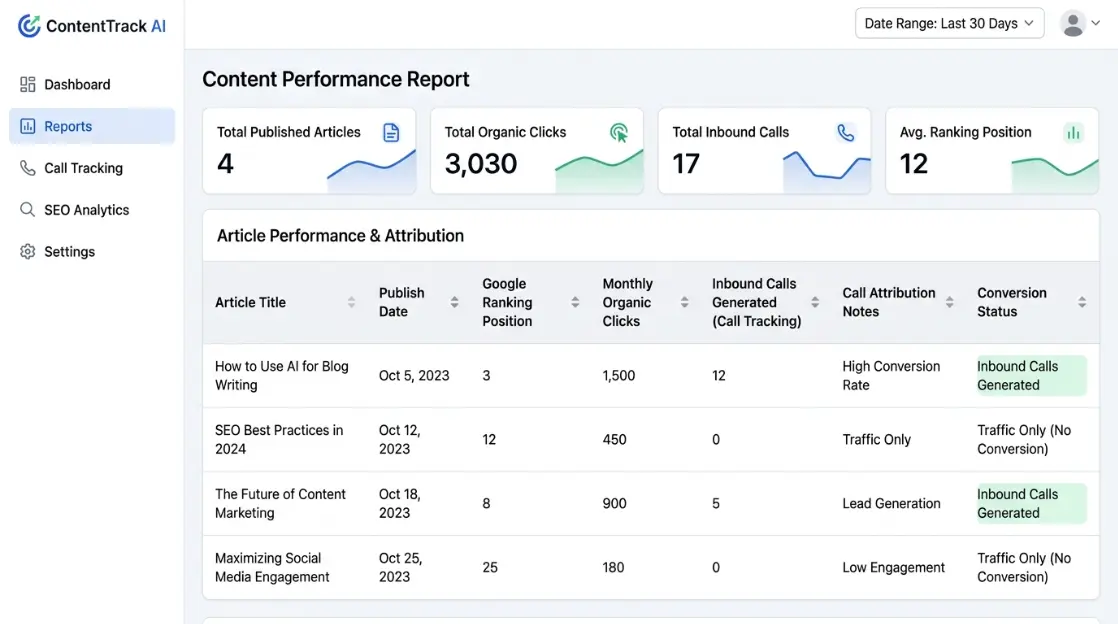
The most overlooked gap in service business content marketing is tracking. Most companies know which articles get the most traffic. Almost none know which articles drive calls.
A pest control article ranked in position two might get 300 visits per month and zero calls. A different article ranked in position eight might get 80 visits and generate six calls per month. Without call tracking attribution at the article level, you cannot tell which articles to optimize, scale, or cut.
Without attribution, the content calendar is driven by traffic metrics that have no relationship to lead volume. High-traffic articles that do not convert keep getting links and updates. Low-traffic articles that actually drive calls get ignored.
The fix requires call tracking software, such as CallRail, configured to attribute calls to specific articles and traffic sources. Google Analytics 4 event tracking for form submissions adds the same attribution layer for form completions. Once attribution is in place, content decisions are made on lead volume rather than pageview counts.
What a Strategic Content Marketing Program Does Instead
A content marketing program that produces leads does not look like a blog schedule with topics assigned to months. It looks like a system where each component ties to a business outcome.
It starts with keyword research that produces a prioritized list of terms with confirmed volume and commercial intent. It maps each keyword to the right buyer stage so research articles have paths to service pages and service pages have paths to calls. It plans seasonal content six to eight weeks before each peak so articles rank before the season arrives, not during it.
Each article is published with the correct technical setup: meta description, schema markup, canonical tag, and immediate Google Search Console submission. Internal links from existing pages are added at the same time to give Google a path to the new content. After a 60 to 90 day ranking window, attribution data shows which articles are driving calls and which need stronger CTAs or conversion fixes.
This is what Nextvure's content marketing service builds for service businesses. The goal is not to produce more content. It is to produce the right content, published at the right time, with the technical foundation and attribution setup that connects each article to actual lead volume.
Fix the System, Not the Volume
Publishing more content without fixing the six structural gaps produces more underperforming content. The problem is not the volume of what has been published. It is the absence of keyword validation, seasonal timing, buyer stage mapping, internal link structure, technical setup, and call attribution.
Each of those gaps is fixable. Most of them cost time and process change, not significant additional budget. But they all need to be addressed before new content investment makes sense, otherwise the next 50 articles perform the same as the last 50.
If your current content is not driving calls, talk to Nextvure about what a content audit and strategic rebuild looks like for your specific market and service category.